
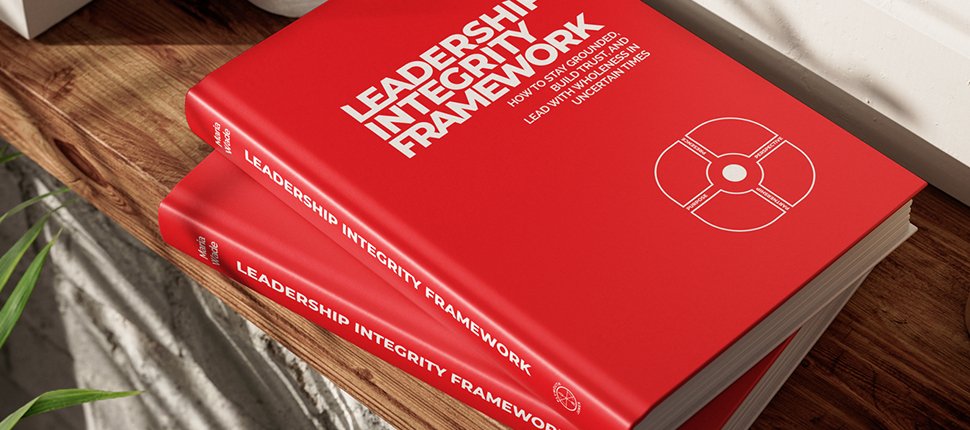

Figure 2.1: The Four Quadrants
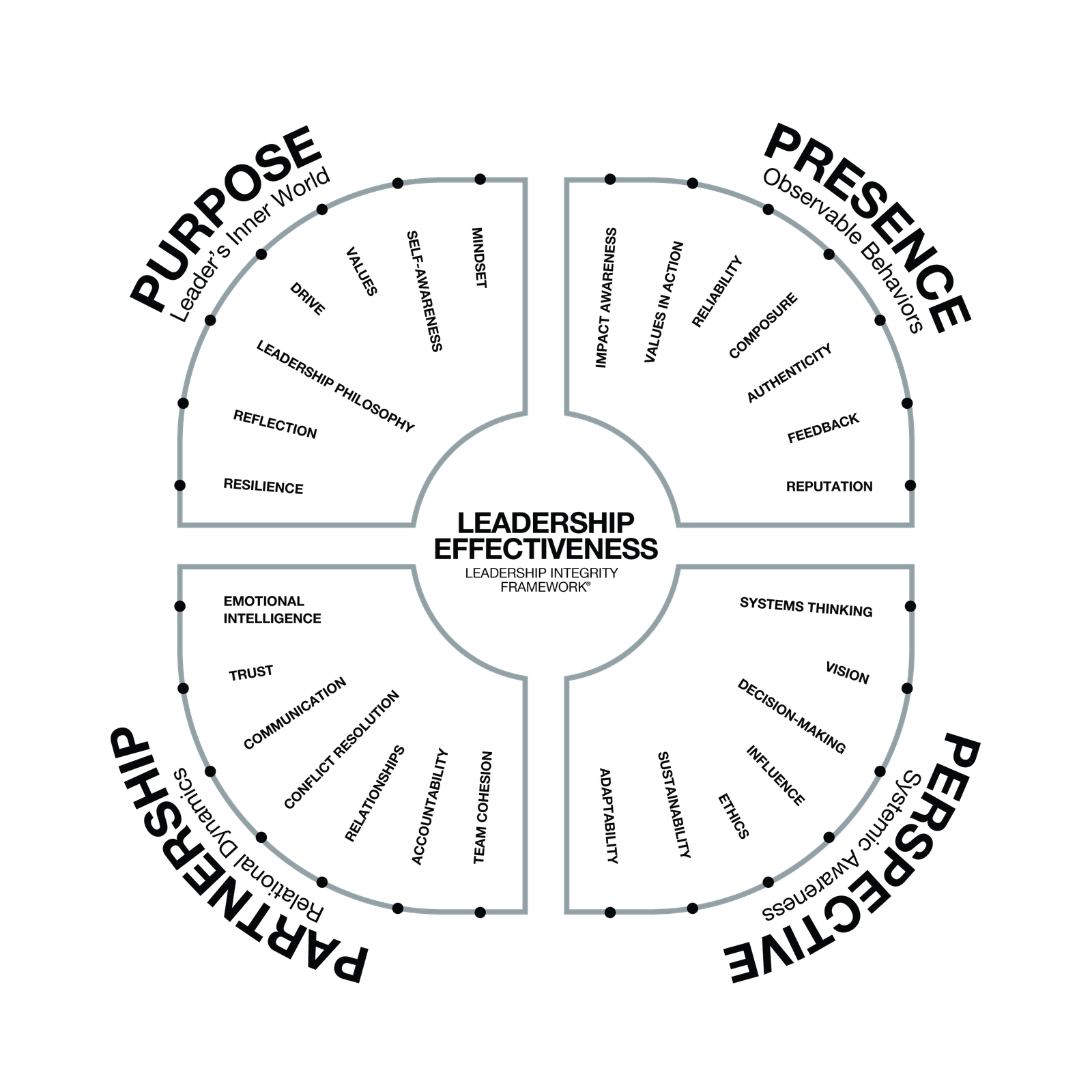
Figure 2.2: The Four Dimensions and Twenty-Eight Elements
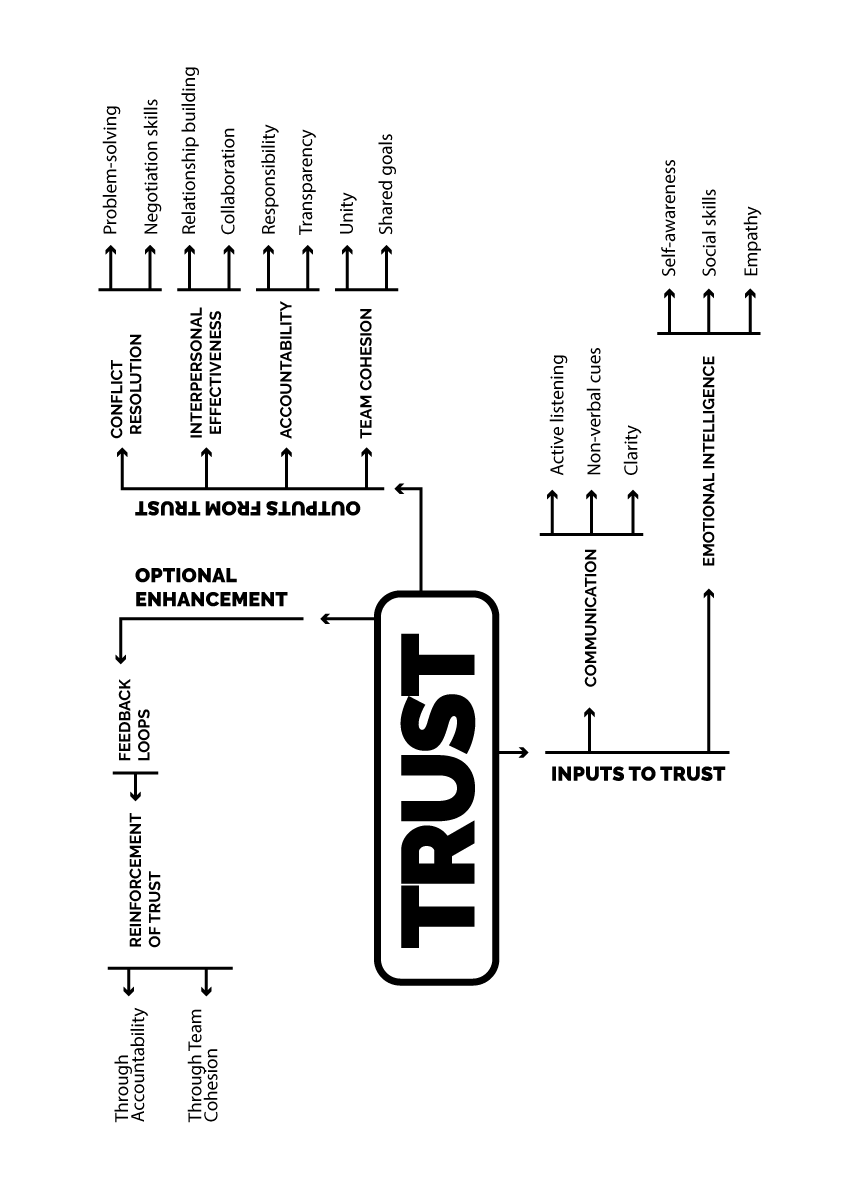
The Trust Model
Definition of Integrity Integrity
Integrity is coherence. It’s the sense of wholeness that comes when your inner clarity, your outer actions, your relationships, and your awareness of systems are in alignment.
Rather than being a fixed trait or a moral claim, integrity is more like a current you can feel and follow. It shows up when your choices echo your values, when your presence reinforces your words, and when your awareness extends beyond yourself.
In the book, integrity means staying connected to yourself, to others, and to the systems you’re in.
Definition of Leadership Integrity
Leadership integrity is the ongoing practice of leading in alignment—with yourself, with others, and with the larger systems you influence.
It is a way of being that harmonizes your personal authenticity, visible actions, relational dynamics, and your strategic awareness.
This kind of leadership doesn’t emerge from mastering one domain. It grows through the integration of many. It calls you to show up fully, stay connected, think systemically, and act with intention. It evolves as you evolve.
Leadership integrity is both a way to stay centered and a commitment to stay true. It grounds you in complexity, builds trust, and makes sustainable leadership possible.
Guided Practices
Voices That Shaped This Work
Recommended reading from Leadership Integrity Framework: How to Stay Grounded, Build Trust, and Lead with Wholeness in Uncertain Times.
~ Maria Wade
The Leadership Integrity Framework® grew from years of learning, questioning, and building on the insights of thinkers who have dedicated their careers to understanding human development, organizational behavior, neuroscience, and the complexities of leading in relationship.
In the Introduction, I mentioned that this book builds on existing theories while reshaping them into something immediately useful for practicing leaders. The resources listed here represent the intellectual foundation that informed my thinking—not as authorities to defer to, but as conversation partners whose work helped clarify what I saw in my coaching practice and leadership experience.
Some of these works directly influenced specific aspects of the framework. Others shaped my general understanding of leadership, human development, or systems thinking in ways that indirectly informed the work. A few challenged my assumptions so thoroughly that they forced me to refine and strengthen my own thinking. All of them contributed to the integrated approach you’ve encountered in this book.
I’ve organized these resources around the four dimensions of the framework, along with two foundational areas—Neuroscience and Adult Development—that inform the entire approach. These are not required reading to benefit from the framework, nor do you need to engage with every resource to apply the concepts effectively. Rather, they’re offered for leaders who want to explore the theoretical underpinnings more deeply or who learn best by understanding the broader context from which ideas emerge.
If you are someone who enjoys following intellectual threads to their sources, these resources offer pathways for continued exploration and learning.
Purpose
- Achor, S. (2010). The Happiness Advantage: The Seven Principles of Positive Psychology That Fuel Success and Performance at Work. Crown Business.
- Bennis, W. G. (2009). On Becoming a Leader. Basic Books.
- Bonanno, G. A. (2004). Loss, Trauma, and Human Resilience: Have We Underestimated the Human Capacity to Thrive After Extremely Aversive Events? American Psychologist, 59(1), 20–28.
- Duckworth, A. (2016). Grit: The Power of Passion and Perseverance. Scribner.
- Dweck, C. S. (2006). Mindset: The New Psychology of Success. Random House.
- Gentry, W. A., Cullen, K. L., & Altman, D. G. (2012). The Irony of Integrity: A Study of the Character Strengths of Leaders [White paper]. Center for Creative Leadership.
- Goleman, D. (1995). Emotional Intelligence: Why It Can Matter More Than IQ. Bantam Books.
- Grant, A. (2014). Give and Take: Why Helping Others Drives Our Success. Penguin Books.
- Heifetz, R. A., Grashow, A., & Linsky, M. (2009). The Practice of Adaptive Leadership: Tools and Tactics for Changing Your Organization and the World. Harvard Business Press.
- Kegan, R., & Lahey, L. L. (2009). Immunity to Change: How to Overcome It and Unlock the Potential in Yourself and Your Organization. Harvard Business Press.
- Schön, D. A. (1983). The Reflective Practitioner: How Professionals Think in Action. Basic Books.
- Southwick, S. M., & Charney, D. S. (2012). Resilience: The Science of Mastering Life’s Greatest Challenges. Cambridge University Press.
- Swart, T. (2019). The Source: Open Your Mind, Change Your Life. St. Martin’s Essentials.
- Tedeschi, R. G., & Calhoun, L. G. (2004). Posttraumatic Growth: Conceptual Foundations and Empirical Evidence. Psychological Inquiry, 15(1), 1–18.
- Treviño, L. K., & Nelson, K. A. (2017). Managing Business Ethics: Straight Talk About How to Do It Right (7th ed.). Wiley.
Presence
- Bailey, K. D., Losty, L. S., Albert, D., Rodenhausen, N., & De Santis, J. P. (2022). Leadership Presence: A Concept Analysis. Nursing Forum, 57(6), 1069–1079.
- Barrett, L. F. (2017). How Emotions Are Made: The Secret Life of the Brain. Houghton Mifflin Harcourt.
- Dagley, G. R., & Gaskin, C. J. (2014). Understanding Executive Presence: Perspectives of Business Professionals. Consulting Psychology Journal: Practice and Research, 66(3), 197–211.
- Dalavai, E. (2019). Executive Presence: Myth, Meaningful or Mastery? In Proceedings of the Ninth International Conference on Engaged Management Scholarship. https://doi.org/10.2139/ssrn.3454084
- Edmondson, A. C. (1999). Psychological Safety and Learning Behavior in Work Teams. Administrative Science Quarterly, 44(2), 350–383.
- Gross, J. J. (2015). Emotion Regulation: Current Status and Future Prospects. Psychological Inquiry, 26(1), 1–26.
- Hesselbein, F. (2011). My Life in Leadership: The Journey and Lessons Learned Along the Way. Jossey-Bass.
- Hogan, R., & Kaiser, R. B. (2005). What We Know About Leadership. Review of General Psychology, 9(2), 169–180.
- Ibarra, H. (2015). Act Like a Leader, Think Like a Leader. Harvard Business Review Press.
- Molinsky, A. (2007). Cross-Cultural Code-Switching: The Psychological Challenges of Adapting Behavior in Foreign Cultural Interactions. Academy of Management Review, 32(2), 622–640.
- Ross, L. (1977). The Intuitive Psychologist and His Shortcomings: Distortions in the Attribution Process. In L. Berkowitz (Ed.), Advances in Experimental Social Psychology (Vol. 10, pp. 173–220). Academic Press.
- Siegel, D. J. (2012). The Developing Mind: How Relationships and the Brain Interact to Shape Who We Are (2nd ed.). Guilford Press.
- Steele, C. M. (2010). Whistling Vivaldi: How Stereotypes Affect Us and What We Can Do. W. W. Norton & Company.
- Zinko, R., & Rubin, M. (2015). Personal Reputation and the Organization. Journal of Management & Organization, 21(2), 217–236.
Partnership
- Barrett, L. F. (2020). Seven and a Half Lessons About the Brain. Houghton Mifflin Harcourt.
- Covey, S. M. R. (2006). The Speed of Trust: The One Thing That Changes Everything. Free Press.
- Cozolino, L. (2014). The Neuroscience of Human Relationships: Attachment and the Developing Social Brain (2nd ed.). W. W. Norton & Company.
- Edmondson, A. C. (2012). Teaming: How Organizations Learn, Innovate, and Compete in the Knowledge Economy. Jossey-Bass.
- Edmondson, A. C. (2019). The Fearless Organization: Creating Psychological Safety in the Workplace for Learning, Innovation, and Growth. Wiley.
- Glaser, J. E. (2016). Conversational Intelligence: How Great Leaders Build Trust and Get Extraordinary Results. Bibliomotion.
- Goleman, D. (1995). Emotional Intelligence: Why It Can Matter More Than IQ. Bantam Books.
- Goleman, D. (2006). Social Intelligence: The New Science of Human Relationships. Bantam Books.
- Graeff, C. L. (1997). Evolution of Situational Leadership Theory: A Critical Review. The Leadership Quarterly, 8(2), 153–170.
- Hackman, J. R. (2002). Leading Teams: Setting the Stage for Great Performances. Harvard Business School Press.
- Hawkins, P. (2017). Leadership Team Coaching: Developing Collective Transformational Leadership (3rd ed.). Kogan Page.
- Ibarra, H. (2015). Act Like a Leader, Think Like a Leader. Harvard Business Review Press.
- Katzenbach, J. R., & Smith, D. K. (1993). The Wisdom of Teams: Creating the High-Performance Organization. Harvard Business School Press.
- Kline, N. (2015). More Time to Think: The Power of Independent Thinking. Cassell Illustrated.
- Lencioni, P. (2002). The Five Dysfunctions of a Team: A Leadership Fable. Jossey-Bass.
- Lieberman, M. D. (2013). Social: Why Our Brains Are Wired to Connect. Crown.
- Mayer, B. S. (2004). Beyond Neutrality: Confronting the Crisis in Conflict Resolution. Jossey-Bass.
- Pessoa, L. (2017). A Network Model of the Emotional Brain. Trends in Cognitive Sciences, 21(5), 357–371.
- Rock, D. (2008). SCARF: A Brain-Based Model for Collaborating With and Influencing Others. NeuroLeadership Journal, 1, 44–52.
- Schein, E. H. (2013). Humble Inquiry: The Gentle Art of Asking Instead of Telling. Berrett-Koehler.
- Yadav, R., & Lata, P. (2019). Role of Emotional Intelligence in Effective Leadership. International Journal on Leadership, 7(2), 27–32.
Perspective
- Bazerman, M. H., & Moore, D. A. (2012). Judgment in Managerial Decision Making (8th ed.). Wiley.
- Bennis, W. G. (2009). On Becoming a Leader. Basic Books.
- Einstein, A. (1949). The World as I See It. Philosophical Library.
- Heifetz, R. A., Grashow, A., & Linsky, M. (2009). The Practice of Adaptive Leadership: Tools and Tactics for Changing Your Organization and the World. Harvard Business Press.
- King, M. L., Jr. (1963). Strength to Love. Harper & Row.
- Kotter, J. P. (1996). Leading Change. Harvard Business School Press.
- Lambert, L., et al. (1995). The Constructivist Leader. Teachers College Press.
- Maxwell, J. C. (1998). The 21 Irrefutable Laws of Leadership: Follow Them and People Will Follow You. Thomas Nelson.
- Meadows, D. H. (2008). Thinking in Systems: A Primer. Chelsea Green Publishing.
- Senge, P. M. (1990). The Fifth Discipline: The Art and Practice of the Learning Organization. Doubleday/Currency.
- Snowden, D. J., & Boone, M. E. (2007). A Leader’s Framework for Decision Making. Harvard Business Review, 85(11), 68–76.
- Treviño, L. K., & Nelson, K. A. (2017). Managing Business Ethics: Straight Talk About How to Do It Right (7th ed.). Wiley.
Foundations: Neuroscience and Adult Development
- Aidane, S. (2011). Managing Projects with the Brain in Mind: The Neuroscience of Leadership [Conference paper]. PMI Global Congress 2011—North America, Dallas, TX. Project Management Institute.
- Bachkirova, T. (2011). Developmental Coaching: Working with the Self. McGraw-Hill Education.
- Barrett, L. F. (2020). Seven and a Half Lessons About the Brain. Houghton Mifflin Harcourt.
- Boyatzis, R. E., & Jack, A. I. (2018). The Neuroscience of Coaching. Consulting Psychology Journal: Practice and Research, 70(1), 11–27.
- Cozolino, L., & Sprokay, S. (2006). Neuroscience and Adult Learning. New Directions for Adult and Continuing Education, 2006(110), 11–19.
- Kays, J. L., Hurley, R. A., & Taber, K. H. (2012). The Dynamic Brain: Neuroplasticity and Mental Health. The Journal of Neuropsychiatry and Clinical Neurosciences, 24(2), 118–124.
- Kegan, R. (1994). In Over Our Heads: The Mental Demands of Modern Life. Harvard University Press.
- Kegan, R., & Lahey, L. L. (2009). Immunity to Change: How to Overcome It and Unlock the Potential in Yourself and Your Organization. Harvard Business Press.
- Lazar, S. W., Kerr, C. E., Wasserman, R. H., Gray, J. R., Greve, D. N., Treadway, M. T., … & Fischl, B. (2005). Meditation Experience Is Associated with Increased Cortical Thickness. NeuroReport, 16(17), 1893–1897.
- Mateos-Aparicio, P., & Rodríguez-Moreno, A. (2019). The Impact of Studying Brain Plasticity. Frontiers in Cellular Neuroscience, 13, 66.
- Rock, D. (2009). Your Brain at Work: Strategies for Overcoming Distraction, Regaining Focus, and Working Smarter All Day Long. HarperBusiness.
- Siegel, D. J. (2012). The Developing Mind: How Relationships and the Brain Interact to Shape Who We Are (2nd ed.). Guilford Press.
- Swart, T., Chisholm, K., & Brown, P. D. (2015). Neuroscience for Leadership: Harnessing the Brain Gain Advantage. Palgrave Macmillan.
© 2025 Maria Wade. Leadership Integrity Framework® is a registered service mark of Maria Wade LLC. All rights reserved. This work may not be used for text and data mining or for training artificial intelligence systems.