
Your First 90 Days Have a Plan. Do They Have a Framework?
What should new executives focus on in their first 90 days? Explore four leadership lenses from the Leadership Integrity Framework ® for identity, trust, relationships, and systems awareness.

What should new executives focus on in their first 90 days? Explore four leadership lenses from the Leadership Integrity Framework ® for identity, trust, relationships, and systems awareness.
I spend most of my working life making sense of people’s ideas. I’m a freelance writer, and people come to me for their writing needs, some with clear requests, others with vague ideas that they’re not sure how to put on paper or if they’d even sound good.

I spend most of my working life making sense of people’s ideas. I’m a freelance writer, and people come to me for their writing needs, some with clear requests, others with vague ideas that they’re not sure how to put on paper or if they’d even sound good.
There’s a moment that doesn’t make it into the congratulatory emails. You’ve earned the title, the announcement has gone out — and underneath the celebration runs a low hum of disorientation you can’t quite name. Most new executives call it “adjustment.” Often it’s something deeper: a developmental gap the job description never mentions, and the reason so many high performers struggle in their first year at the top.
Most senior leaders aren’t lacking capability. They’ve developed the skills, learned the language, and invested in their growth. What’s missing isn’t another model. It’s a way to bring what they already know into a coherent way of leading. The future belongs to integration, not innovation.
Organizations spend billions on leadership development, and most of it doesn’t produce meaningful, lasting change. The problem isn’t effort or budget. It’s the model. Most programs deliver horizontal development: new knowledge, new skills, new competencies. What’s needed is vertical development, the kind that expands how leaders make sense of complexity itself. Horizontal development gives you more apps. Vertical development upgrades the operating system.
Most leadership development practices focus on adding new behaviors or frameworks. The approach here is slightly different. We’re working with attention, not accumulation. Because with the Leadership Integrity Framework, you don’t need hours of journaling or quarterly retreats. What you do need are moments of conscious choice woven into what you’re already doing.
My book opens with a former client’s question: are leaders even aware they should ask whether their leadership is integrated and sustainable? The LīF Assessment is a structured way to ask it. Here’s what it asks, how to read your answers, what it doesn’t claim, and where it’s going next.
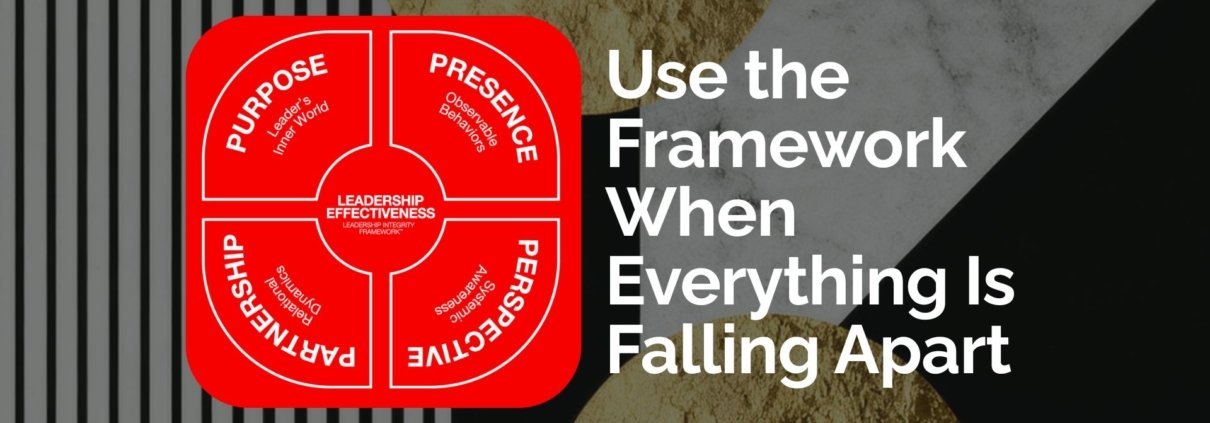
Under stress, you don’t rise to the level of your training. You fall to the level of your deepest patterns. The Leadership Integrity Framework offers four grounding questions that help senior leaders stay coherent when everything else is falling apart.
Some of the most authentic leaders I’ve ever worked with were also some of the most stuck. Authenticity is necessary — but it isn’t sufficient.