I spend most of my working life making sense of people’s ideas. I’m a freelance writer, and people come to me for their writing needs, some with clear requests, others with vague ideas that they’re not sure how to put on paper or if they’d even sound good.
My job is to understand their ideas and bring them to life in a way that will capture their audience’s attention. Sometimes, that means reading research papers. Sometimes it means interviewing experts. And sometimes it means taking something that’s scattered across disciplines and trying to explain it clearly and in a way that deepens understanding.
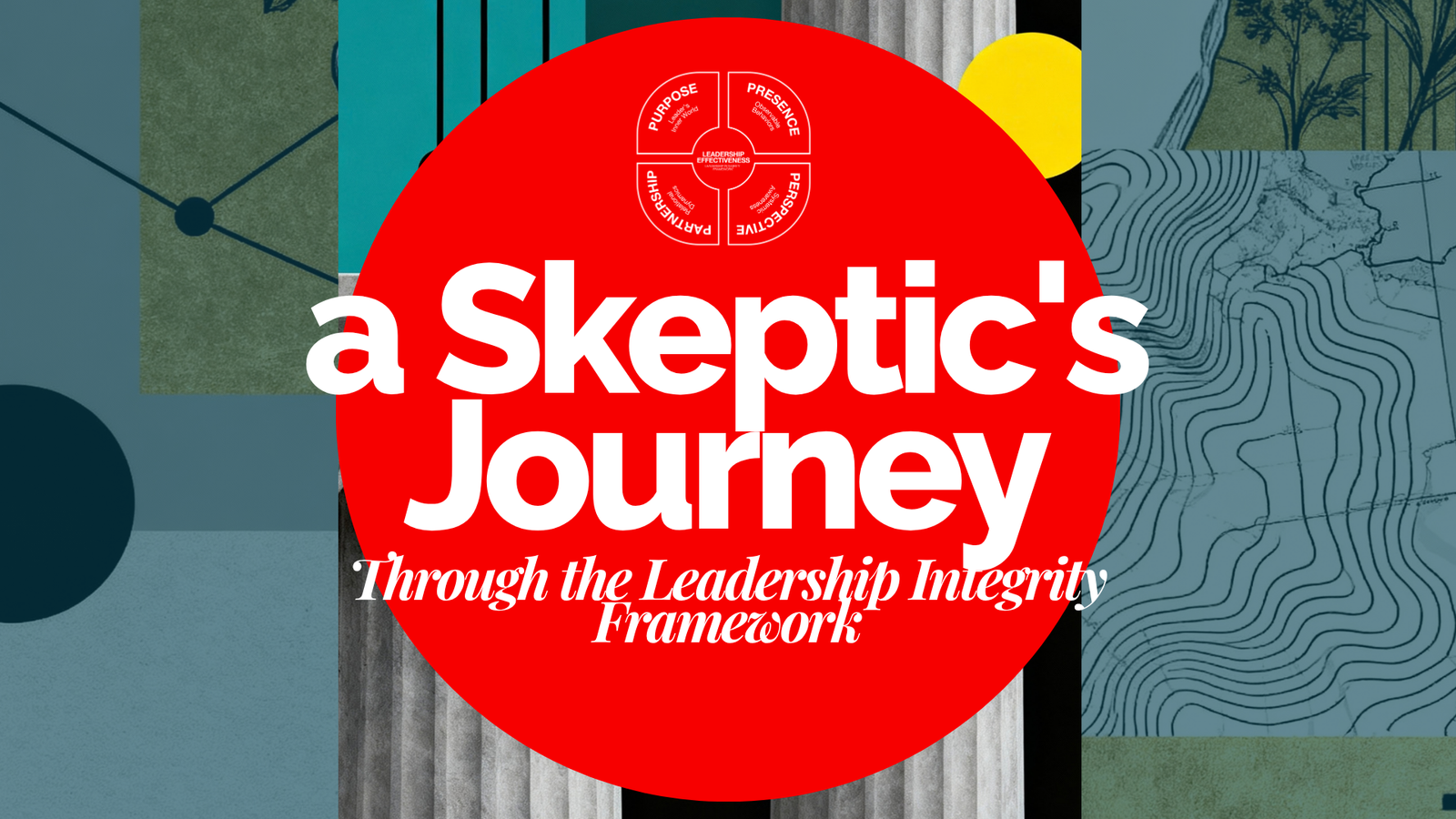
That’s how I came across the Leadership Integrity Framework. I thought it would be just part of a small research project, and that I’d do what I always do: read, synthesize, write, and move on.
By then, I’d read my way through a small library of leadership thinking. Competency models taught me what effective leaders do. Emotional intelligence reminded me that leadership is deeply human. Systems thinking helped me see patterns rather than isolated problems. Developmental theories shifted my attention from what leaders know to how they make sense of complexity.
Even more integrative approaches, like Ken Wilber’s Integral Theory, tried to bring those perspectives together. I admired the ambition. At the same time, I wondered what those ideas looked like in an ordinary leadership conversation on an ordinary Tuesday morning.
And that was the one thing all these ideas had in common. It was difficult to see them in action when you’re sitting across from a client making tough decisions or trying to lead through uncertainty.